

From LTL to STL: Stories From Expedite All Leadership
In freight, experience has a way of sharpening judgment. After decades spent inside one of the most demanding corners of the industry, Mike Ernst, now President, and Ted McClain, Senior VP of Sales, arrived at Expedite All with something more valuable than résumés: a deep understanding of where traditional freight works, where it breaks down, and where shippers need a better option.
In conversation with Alex Winston, Chief Strategy Officer, Mike and Ted reflect on their years in LTL, the collapse of Yellow, and the opportunity they saw in Small Truckload. What emerges is more than a career story. It is a practical explanation of why STL matters, why dedicated smaller-capacity freight is gaining ground, and why freight leaders with long LTL backgrounds see it as a smarter fit for a growing share of shipments.
Why experienced LTL leaders were drawn to STL
Mike Ernst and Ted McClain did not come into logistics from the outside. They built careers inside a system where speed, service, density, and execution all had to work in sync every day.
For Mike, that meant moving through multiple operational and leadership roles over more than two decades. He worked across pickup and delivery, linehaul, field leadership, corporate functions, and major distribution center operations.
For Ted, it meant 35 years spanning industrial engineering, city operations, terminal leadership, and eventually enterprise sales in the 3PL channel.
That background matters because both men understand the strengths of LTL firsthand. They also understand its structural limits.
As Ted explains:
“If you need something done economically and an open-ended delivery time, LTL is perfect.”
That is an important point. LTL remains a critical mode in the market. It is cost-efficient, scalable, and highly effective for many shipment types. But not every shipment belongs in a network built around consolidation and multiple handoffs.
That is where the story begins to shift.
Where LTL struggles and why some shipments need a different model
The same network design that makes LTL economical can also make it risky for freight that is time-sensitive, fragile, high-value, or operationally critical.
Ted describes the issue plainly:
“Those things are probably not a good fit in an LTL environment because they are cross-docked multiple times.”
That one sentence captures the central tradeoff. In LTL, freight often changes trailers several times before final delivery. Each touchpoint creates another opportunity for delay, damage, misrouting, or loss. Most of the time, the system works. But when a shipment is urgent, irreplaceable, or tied to a hard deadline, “most of the time” is not enough.
Mike reinforces that point with an operations-led view. In an LTL environment, mistakes do not have to be dramatic to be costly. A shipment can be loaded to the wrong trailer. Packaging can fail under repeated handling. A forklift can puncture the freight. A critical shipment can simply end up in the wrong place inside a very large system.
One story from Mike makes that risk tangible. Early in a new leadership role, he was pulled into a search for a critical airline shipment that had gone missing in a major facility. The freight had been mishandled, moved incorrectly, and ultimately ended up at an overage, shortage, and damage location. It took about a week to find.
That is not a story about negligence. It is a story about complexity. Large networks create many opportunities for service, but they also create many points of failure.
Alex Winston frames the issue well when he notes that the kind of problem Expedite All solves is often “a problem that LTL has a lot of problems trying to overcome.”
The space between LTL and FTL
This is where Small Truckload enters the picture.
STL is not simply “expedite” in the narrow sense, and it is not just a rescue option for freight in trouble. It fills the gap between LTL and Full Truckload: shipments that are too important, too urgent, or too sensitive for a shared network, but too small to justify paying for a full 53-foot trailer.
Mike describes it directly:
“It’s a space in between Full Truckload and LTL.”
That positioning is what makes STL compelling. A shipper with one to 14 pallets often faces an imperfect choice. Put it in LTL and accept network handling, less control, and broader delivery windows. Or move it on Full Truckload and pay for far more equipment than the shipment actually requires.
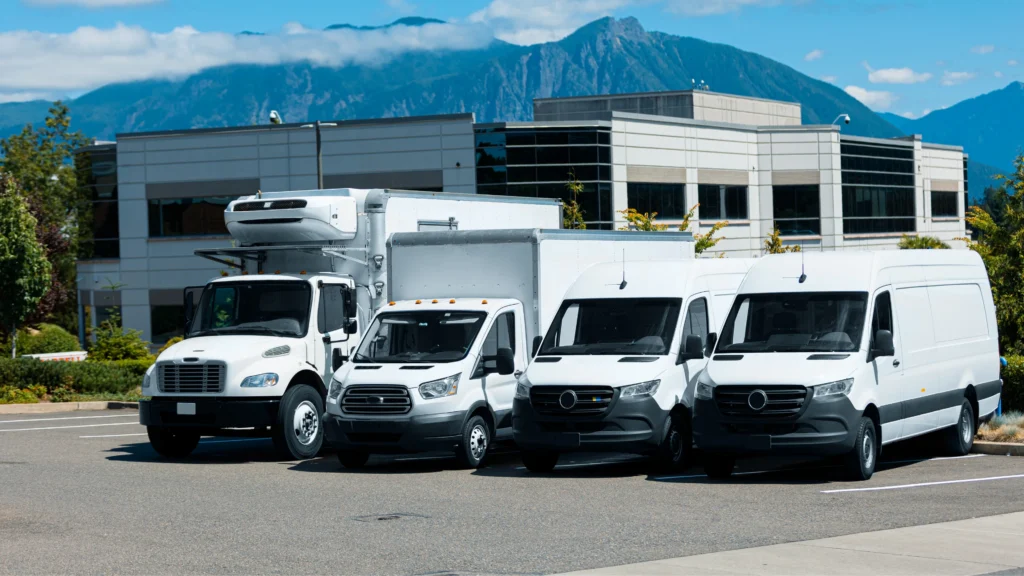
Small Truckload offers a third path: dedicated, door-to-door transportation using right-sized equipment.
As Mike puts it:
“You’re getting that exclusive use vehicle. So it’s a no-touch solution. It’s door-to-door. It’s fast. It’s safe. It’s secure.”
That is more than a service description. It is the operating logic behind the mode.
For freight that cannot afford repeated handoffs, unpredictable dwell time, or visibility gaps, dedicated smaller-capacity vehicles can create a better balance of speed, cost, and control. Instead of forcing freight into a network that was not designed for it, STL aligns the shipment with the right equipment and the right service model from the start.
Why Expedite All stood out
After Yellow closed, both Mike and Ted had choices. What pulled them toward Expedite All was not just a new job. It was a clear value proposition.
For Mike, the appeal was the combination of niche specialization and scale. The company’s broad North American coverage, large vehicle base, cross-border capabilities, and technology stack made the model feel both different and ready.
For Ted, the value was even more personal. After years of managing relationships through service constraints, he found himself looking at a product he could sell with confidence instead of apology.
He says it best:
“Now I can sell with a lot of confidence in the product, in the people, and the process.”
That line gets at something many logistics buyers understand instinctively. The best transportation relationships are not built only on pricing or procurement efficiency. They are built on trust that the provider can actually execute when the shipment matters most.
Ted also points to another important difference: his conversations no longer have to revolve around working around limitations. They can focus on growth, fit, and solving the customer’s problem the right way.
In practical terms, that means offering a dedicated solution with network depth, speed, visibility, and performance designed for freight that cannot be left to chance.
Leadership shaped by pressure, teamwork, and execution
Mike’s reflections on leadership are especially relevant because they connect directly to how Expedite All approaches growth. His framework is not abstract. It is rooted in operations, sports, accountability, and team alignment.
One of his clearest lines is this:
“The team has to understand the why.”
That idea matters in freight because execution depends on coordinated decisions across many roles. People do not perform at a high level just because they are told what to do. They perform when they understand the objective, the standard, and the reason it matters.
Mike also emphasizes that leadership is not only about directing teams. It is about understanding individuals: what motivates them, what they want from their career, and what support they need to succeed.
And then he distills leadership into one of the strongest lines:
“As a leader, I think one of the most important things is to try to remove obstacles.”
That mindset fits the Expedite All model well. In a business built around urgent freight, problem-solving cannot be passive. Teams need tools, clarity, support, and fast decision-making. Removing obstacles is not a management slogan. It is an operational requirement.
About the future of freight
Shippers today are under pressure to move faster, reduce damage risk, improve visibility, and control transportation spend. At the same time, not every shipment fits neatly into legacy mode definitions. That creates room for specialized solutions that sit between the old categories.
Expedite All’s team understands that shift because they have spent decades seeing what happens when freight is forced into the wrong model.
STL is not replacing LTL or FTL. It is solving for the freight that neither one handles especially well.
And that is what makes this conversation so useful. It is not theory. It is a view from leaders who have worked inside the pressure of freight for decades and now see a better way to move certain shipments.
If your freight needs more than a standard network can offer, Expedite All is built for that space.
Need a dedicated solution between LTL and Full Truckload? Contact Expedite All to find the right capacity for your next shipment.
You May Be Interested In
The Art of Cost-Effective Shipping Strategies and Solutions
While shipping expenses are often viewed through the narrow lens of carrier fees, this perspective barely scratches the surface of what truly constitutes the cost of moving goods from point A to point B. This initial glimpse into supply chain management invites us to delve into the more subtle yet equally significant elements that contribute to the overall expense of shipping…
How to Choose Between LTL and STL Shipping
Making an informed decision between Less-Than-Truckload (LTL) and Small-Truckload (STL) shipping options presents a considerable challenge for businesses seeking to strike a harmonious balance between the efficiency and cost-effectiveness of their supply chains. As the largest small truck network in the United States, offering STL services tailored for time-sensitive, fragile, or high-value shipments, we understand these complexities like nobody else in the shipping business…